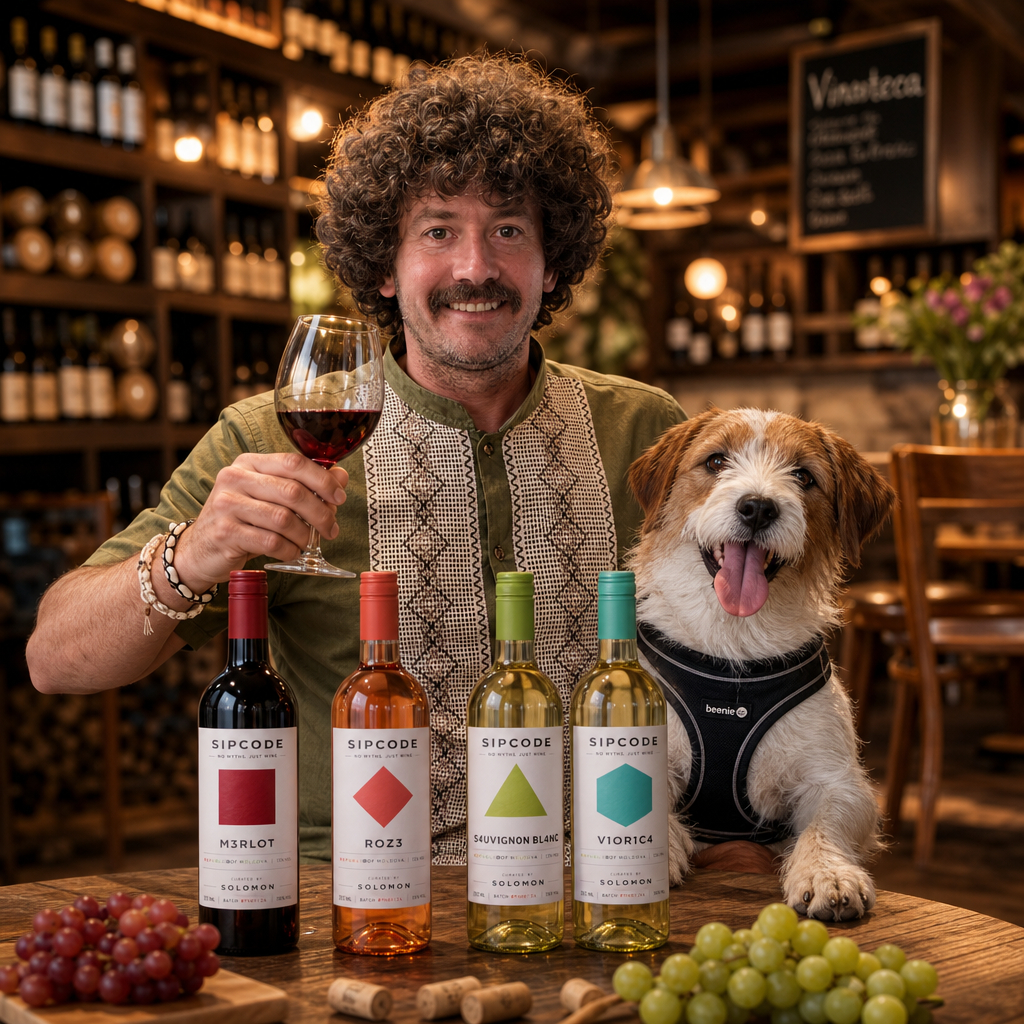
The wine industry has a problem with consistency. We say a vintage is "great" or "weak", but rarely talk about how a single batch behaves week to week — between bottling and the moment it lands in someone's glass. Bottles change. Sometimes they change a lot. Pretending otherwise is the kind of polite fiction that makes wine harder to trust.
Fetească Neagră #FN01/25 came across our table for the first time on the 28th of February, 2026. Three random bottles pulled from a 2,400-bottle lot at Castel Mimi's Bardar facility. Five panelists, blind, scored it cold against the variety's tier.
The first tasting
The numbers came in tight. Three of five panelists gave it an 86 out of 100. The other two: 84 and 87. Median 86. Mean 85.6. By our rules, that's a marginal pass — two-thirds said yes, but the panel was unenthusiastic. Notes were polite: "clean", "varietal", "young", "needs time".
I remember closing my notebook a little disappointed. The producer believed in this lot. The vineyards were well-managed, the harvest was within the right window, the fermentation was clean. There was no obvious flaw. There was just no thrill.
"Polite is the worst rating a wine can get. It means the panel didn't disagree, but no one wanted to drink another glass either."
We held the lot for batch validation — three more random bottles to taste over the following weeks. Standard process. The wine sat. So did I.
Two months later, blind again
April 19th. The validation tasting. Same wine, different bottles, different panelists (we rotate to avoid bias). I was the only person on both panels.
Scores: 91, 89, 92, 90, 88. Median 91 out of 100. A jump of five points in eight weeks.
Same wine. Same lot. Same panel methodology. The only thing that changed was time.
What had happened?
Three things, in roughly equal measure:
- Tannin had softened. The first tasting was eight weeks after bottling. Bottle shock — that period when freshly-bottled wine tastes shy and disjointed — typically lasts 4 to 12 weeks. We tasted at the worst possible moment.
- Aromatic complexity opened up. The first time, we got cherry and "dried herbs" — generic. By April, distinct notes emerged: bay leaf, leather, something almost smoky. The wine had started telling its own story.
- The finish lengthened. First panel: 4–6 seconds. Second panel: 11–14 seconds. That's not subjective; we time it.
What this means for the code
FN01/25 earned its code on the second tasting. It's now live in the catalog. But the journey to the code matters more than the code itself.
If we'd shipped after the first tasting, you would have received an 86-point wine — a marginal Fetească Neagră. Solid, but not the wine the producer made. By waiting two months for batch validation, we caught the wine in its actual form: a 91-point bottle that holds the SIP C0DE standard.
This is why our process is what it is. Not because we like ceremony — but because young wine lies, and we don't want to be in the business of repeating the lie.
If you bought one
If you bought a bottle of FN01/25 in April or after, you're getting the wine the second panel rated 91. The QR on the back label links to both panel reports — first and second tasting — so you can read the journey for yourself.
If you bought one and felt it was tight, give it 30 minutes in a decanter. The wine still has more to say.